
pay online

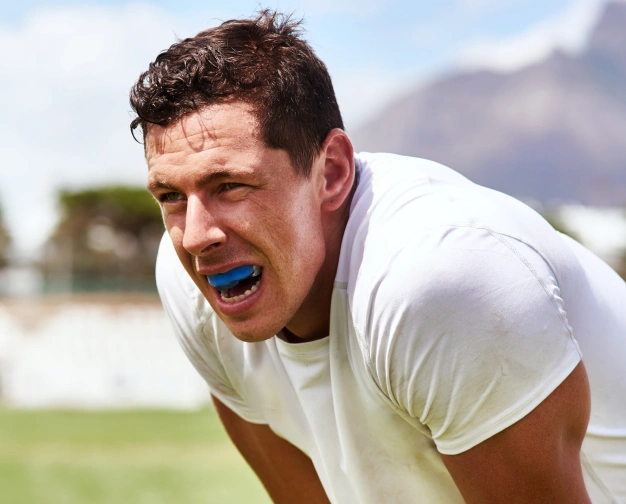
Mouth Guards Beyond Sports
Mouth guards aren’t just for sports—they’re an effective solution for a range of dental and health concerns in both adults and children. Whether you’re dealing with teeth grinding (bruxism) or mild sleep apnea, a mouth guard can help protect your teeth and improve your overall quality of sleep. Made from durable, medical-grade plastic, these devices are designed to comfortably fit over your upper teeth. They provide a protective barrier that helps prevent damage to your teeth, gums, tongue, and cheeks caused by grinding or clenching, and they can also assist in keeping your airway open during sleep.
Who Should Consider a Mouth Guard?
Mouth guards aren’t just for athletes—they’re beneficial for both children and adults facing a variety of oral health risks. According to the American Dental Association, anyone participating in activities where facial injury is possible should wear a custom-fitted mouth guard for protection.
Beyond sports, many people unknowingly grind or clench their teeth during sleep (a condition known as bruxism). This can lead to excessive tooth wear, jaw pain, and even frequent headaches. A mouth guard acts as a cushion between the upper and lower teeth, reducing the effects of grinding and relieving pressure on the jaw muscles.
Mouth guards are also highly recommended for individuals with braces or other fixed dental appliances. While they typically cover just the upper teeth, custom solutions can be made for the lower teeth—especially important for those with lower braces. For patients with braces who play sports, a properly fitted mouth guard is essential to prevent serious injuries caused by impact to the mouth, such as cuts to the lips, cheeks, or tongue from brackets and wires.
When Should You Wear a Mouth Guard?
To get the full benefits of a dental mouth guard, consistent use is key. Whether you’re using it for nighttime protection or during sports, knowing when and how to wear your mouth guard can make all the difference.
Night Guards for Teeth Grinding
If you’ve been prescribed a night guard to manage teeth grinding (bruxism), it should be worn every night while sleeping. Although it may feel unfamiliar at first, most patients adjust within a few nights if the guard fits properly and comfortably. Wearing it consistently is essential—occasional use can prolong the adjustment period and reduce its effectiveness in relieving jaw pain and preventing tooth damage.
Sports Mouth Guards for Physical Activity
Athletes or anyone participating in high-impact sports should wear their mouth guard every time they play or practice. Skipping even one session can increase the risk of dental injuries. Avoid chewing on your mouth guard, as this can cause it to break down or lose its shape over time. Proper care and use will help maintain its fit and function longer.
At Culver Village Dental, we provide custom-fitted mouth guards and guidance on how to use them for optimal protection. Whether you need one for nighttime grinding or athletic use, we’re here to help you protect your smile.
Protecting Your Smile During Sports
Injuries can occur during any physical activity, especially in contact sports. A custom-fitted athletic mouth guard is a critical piece of protective gear that helps shield the teeth, lips, gums, and other soft tissues from impact-related injuries.
Mouth guards are particularly important for athletes in high-contact sports like football, hockey, basketball, soccer, and martial arts. Made from durable, flexible plastic, athletic mouth guards are designed to absorb and distribute the force of blows to the face—reducing the risk of chipped, broken, or knocked-out teeth.
While slightly thicker than night guards, athletic mouth guards are still discreet and comfortable to wear. In some cases, they may cause a minor protrusion of the upper lip, but they’re generally not noticeable to spectators.